Archer Push-Up: Form, Muscles Worked and How to Progress
By Fitness ScienceUpdated 7 min read6 peer-reviewed studiesEditorial policy
- No equipment
- Intermediate
- Chest and triceps
On this page
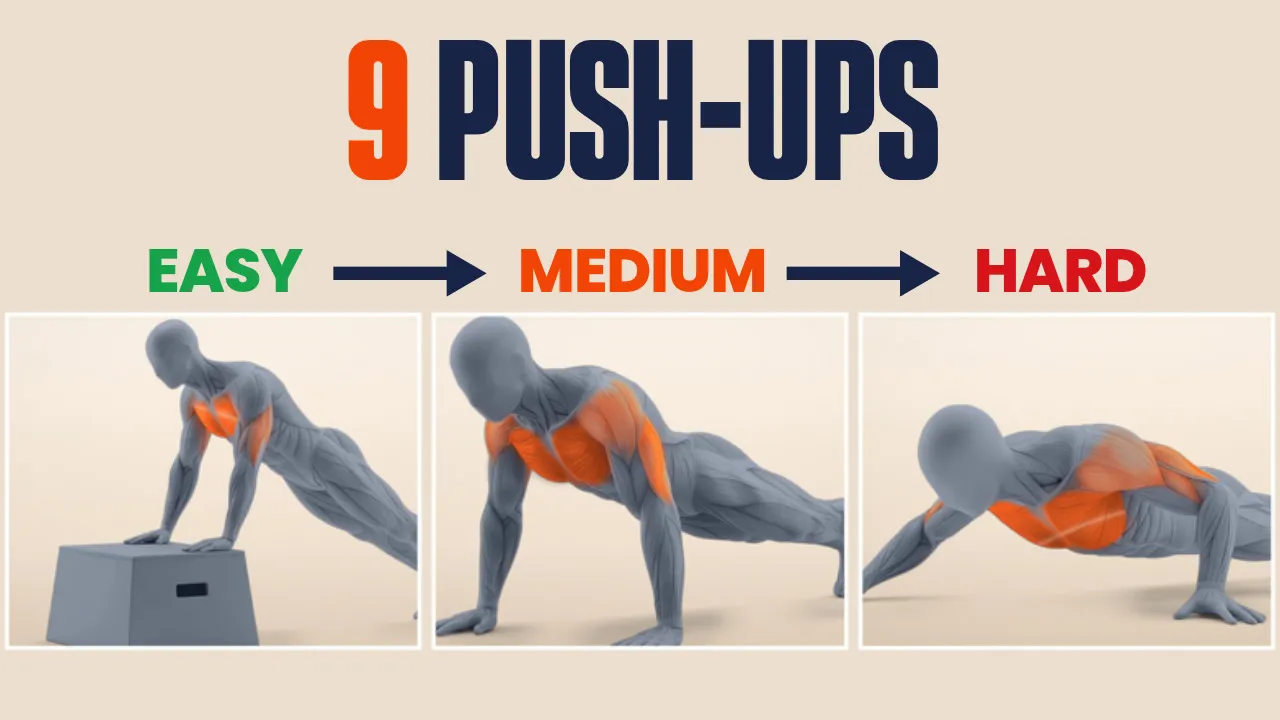
The archer push-up fits into our full no-equipment chest workout once regular push-ups start to feel easy. This guide covers what it trains, how to do it well, when you are ready for it and how to keep making it harder.
How much weight your hands press
In a standard push-up your hands do not lift your whole bodyweight. Force-plate studies put it at about 64% of bodyweight at the top of the movement (Ebben and colleagues, 2011) and closer to 69 to 75% depending on the position (Suprak and colleagues, 2011). Your feet carry the rest.
In an archer push-up most of that hand load moves onto one arm, while the straight arm helps with balance. No study has measured the archer push-up directly, but by that math the working arm handles roughly half your bodyweight on its own. That is why it feels so much harder than a normal push-up, and why it builds strength that two-arm push-ups stop building once you can do 20 or more.
Muscles worked
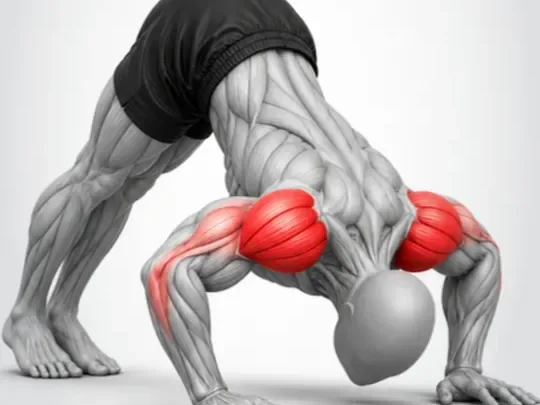
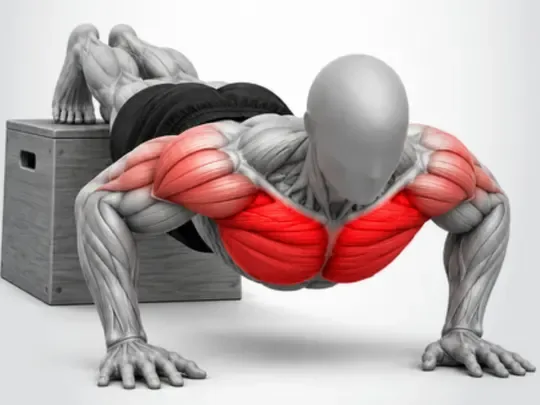
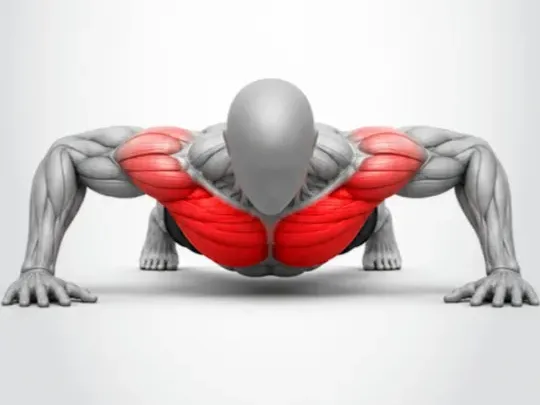
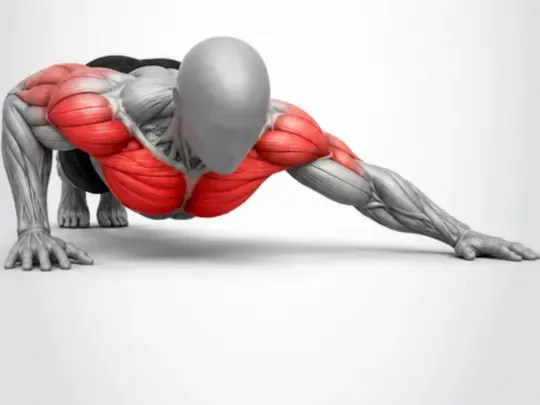
Trains: chest (pectoralis major), triceps and front shoulder on the working side, plus the serratus anterior and the obliques, which stop your body from twisting.
The straight arm is not resting. It holds your shoulder stable and keeps the movement controlled. Research on hand width helps explain the rest: in a study of 12 men, narrower hands raised triceps activity, and chest activity was higher with narrow or normal hand placement than with very wide hands (Kim and colleagues, 2016). An earlier study found the same pattern for the chest and triceps (Cogley and colleagues, 2005). So keep the working hand close enough to your chest that you can press from a strong position, even though your hands start wide.
Pushing with one side loaded also makes your core work against rotation. Push-up variations with uneven loading raised trunk muscle activity and spine load compared with a standard push-up (Freeman and colleagues, 2006).
Are you ready for archer push-ups?
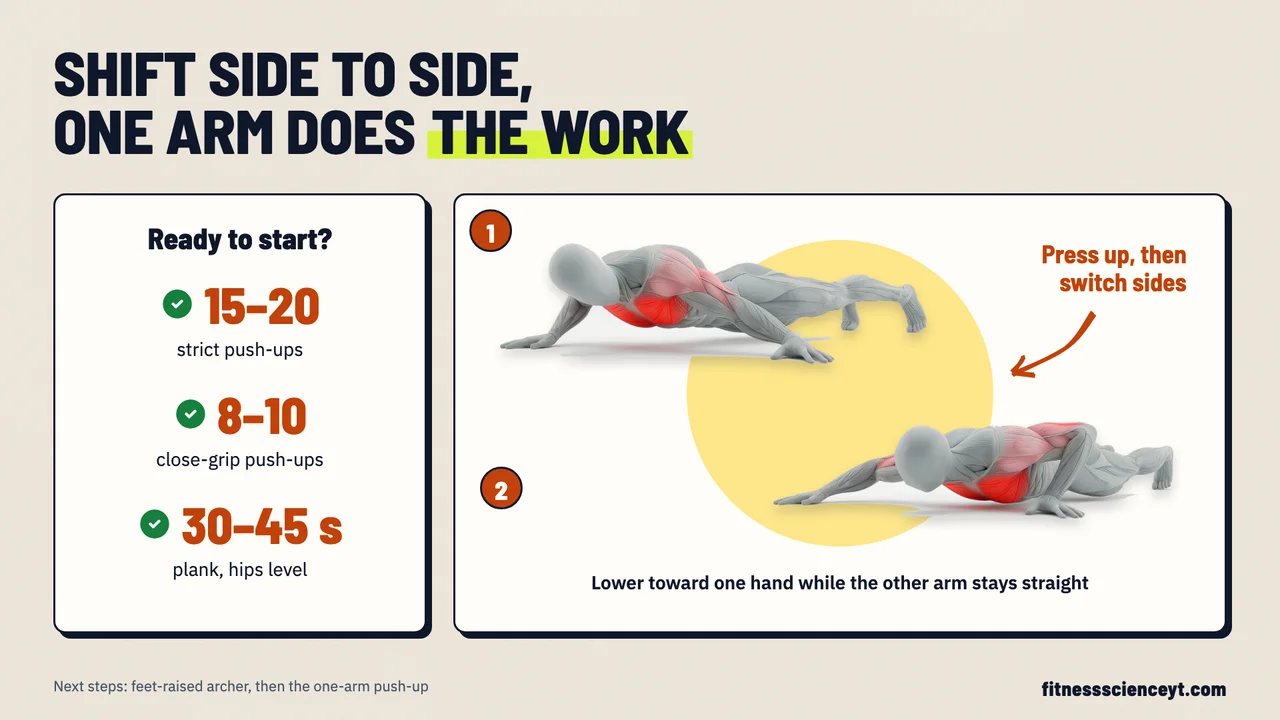
You are ready when you can do all three of these with good form:
- 15 to 20 standard push-ups with your chest close to the floor
- 8 to 10 close-grip push-ups
- a 30 to 45 second plank without your hips sagging
If one of these is missing, build it first. The archer push-up exposes any weakness in the triceps or the core.
How to do an archer push-up
How to do it: Set your hands about one and a half to two times shoulder width apart, level with your mid-chest, fingers turned slightly out. Spread your feet a little wider than usual for balance. Brace your stomach and keep your shoulders down away from your ears. Lower slowly toward one hand over 2 to 3 seconds, keeping that elbow about 45 degrees from your body, while the other arm stays straight and slides or rolls on its hand. Stop with your chest just above the working hand, then press back up to the middle.
Why it works: Putting more of the load on one arm creates the tension you need for muscle growth without adding weight. Hard push-up sets build chest muscle and strength about as well as a light bench press (Kikuchi and Nakazato, 2017).
Common mistake: letting the hips twist toward the working side. Keep your hips square to the floor. If you cannot, use an incline until you can.
Easier or harder: put your hands on a bench, sofa or step to make it easier. Put your feet up or slow the lowering phase to make it harder.
Common mistakes and how to fix them
- Twisting the hips. This shifts load into the lower back. Widen your feet or use an incline.
- Hands too close together. Below about one and a half times shoulder width, the straight arm has nowhere to go. Widen your setup.
- Elbow flared out to 90 degrees. This is hard on the shoulder. Keep the working elbow at about 45 degrees.
- Shrugging. Pull your shoulders down before every rep.
- Cutting the depth short. The bottom half is where the chest works hardest. Lower until your chest is close to your hand.
Regressions and progressions
The angle of your body changes how much weight your hands carry. In the same force-plate study, hand load went from about 41% of bodyweight with hands raised 61 cm (24 in), to 49% for knee push-ups, 55% with hands raised 30 cm (12 in), 64% on the floor, 70% with feet raised 30 cm and 74% with feet raised 61 cm (Ebben and colleagues, 2011). You can use the same ladder for archer push-ups.
| Stage | Variation | Sets and reps |
|---|---|---|
| Beginner | Incline or kneeling archer | 3 sets of 8 to 10 per side |
| Bridge | Slow lowering only, 4 to 5 seconds | 3 sets of 5 per side |
| Standard | Floor archer push-up | 3 to 4 sets of 8 to 10 per side |
| Advanced | Feet-raised archer or straight arm on fingertips | 3 to 4 sets of 6 to 8 per side |
| Peak | Incline one-arm push-up, then floor | 3 sets of 3 to 5 per side |
If you want more upper-chest work, the feet-raised version pairs well with our guide to the decline push-up for the upper chest.
How to program archer push-ups
Train them 2 to 3 times a week on non-consecutive days. For strength, do 3 to 5 sets of 3 to 6 reps per side with 2 to 3 minutes of rest. For muscle, do 3 to 4 sets of 6 to 10 reps per side, stopping one or two reps before failure, with about 2 minutes of rest. Start each session with your weaker side.
Not sure how much total volume you need? Our guide on how many push-ups it takes to build your chest breaks it down by level. If you are still choosing hand positions, see wide vs close-grip push-ups.
Key takeaways
- The archer push-up moves most of the pressing load onto one arm, so it keeps building strength after standard push-ups get easy.
- It trains the chest, triceps and front shoulder on the working side, and the core works hard to stop rotation.
- Start when you can do 15 to 20 clean push-ups, 8 to 10 close-grip push-ups and a 30 to 45 second plank.
- Use an incline to learn it and raised feet to make it harder, then move toward the one-arm push-up.
Frequently asked questions
How many push-ups should I be able to do before archer push-ups?
About 15 to 20 strict push-ups, 8 to 10 close-grip push-ups and a solid 30 to 45 second plank.
Do archer push-ups build muscle?
Yes. Push-up sets taken close to failure build chest and triceps muscle about as well as a light bench press (Kikuchi and Nakazato, 2017), and the archer push-up makes each rep much heavier.
Should I alternate sides or finish one side first?
Either works. Alternating keeps your form fresh. Finishing all reps on one side gives that side more continuous tension. Start with your weaker side either way.
Do archer push-ups lead to one-arm push-ups?
They are the most common stepping stone. Once you can do 8 or more clean reps per side, start practising incline one-arm push-ups.
Safety note
This guide is general fitness information, not medical advice. Archer push-ups put more load on one shoulder and wrist than a standard push-up. Stop if you feel sharp pain, go back to an incline version, and check with a doctor or physiotherapist if you have a shoulder or wrist injury.
Sources
- Freeman S, Karpowicz A, Gray J, McGill S. Quantifying muscle patterns and spine load during various forms of the push-up. Medicine & Science in Sports & Exercise. 2006;38(3):570-577. doi:10.1249/01.mss.0000189317.08635.1b
- Suprak DN, Dawes J, Stephenson MD. The effect of position on the percentage of body mass supported during traditional and modified push-up variants. Journal of Strength and Conditioning Research. 2011;25(2):497-503. doi:10.1519/JSC.0b013e3181bde2cf
- Ebben WP, Wurm B, VanderZanden TL, et al. Kinetic analysis of several variations of push-ups. Journal of Strength and Conditioning Research. 2011;25(10):2891-2894. doi:10.1519/JSC.0b013e31820c8587
- Kim Y-S, Kim D-Y, Ha M-S. Effect of the push-up exercise at different palmar width on muscle activities. Journal of Physical Therapy Science. 2016;28(2):446-449. doi:10.1589/jpts.28.446
- Cogley RM, Archambault TA, Fibeger JF, et al. Comparison of muscle activation using various hand positions during the push-up exercise. Journal of Strength and Conditioning Research. 2005;19(3):628-633. doi:10.1519/15094.1
- Kikuchi N, Nakazato K. Low-load bench press and push-up induce similar muscle hypertrophy and strength gain. Journal of Exercise Science & Fitness. 2017;15(1):37-42. doi:10.1016/j.jesf.2017.06.003
Related guides